
While much of the public conversation around artificial intelligence has focused on content creation, a quieter transformation is taking place behind the scenes.
Across manufacturing, logistics, procurement, and operations, AI is beginning to perform work that historically required entire teams of people. As these capabilities become more accessible, entrepreneur Caro Porto believes a larger shift is underway beneath the surface of the industry, one that could fundamentally reshape who gets to compete on a global stage.
Caro is the founder and CEO of Modet, an AI-native fashion supply chain platform, and co-founder of YOO, one of Colombia’s first emerging designer retailers. Her career has spanned fashion, manufacturing, technology, and global commerce, and today she guest lectures on procurement and artificial intelligence at Harvard Business School while contributing to research at Harvard Kennedy School, focused on capital access ecosystems and economic development.
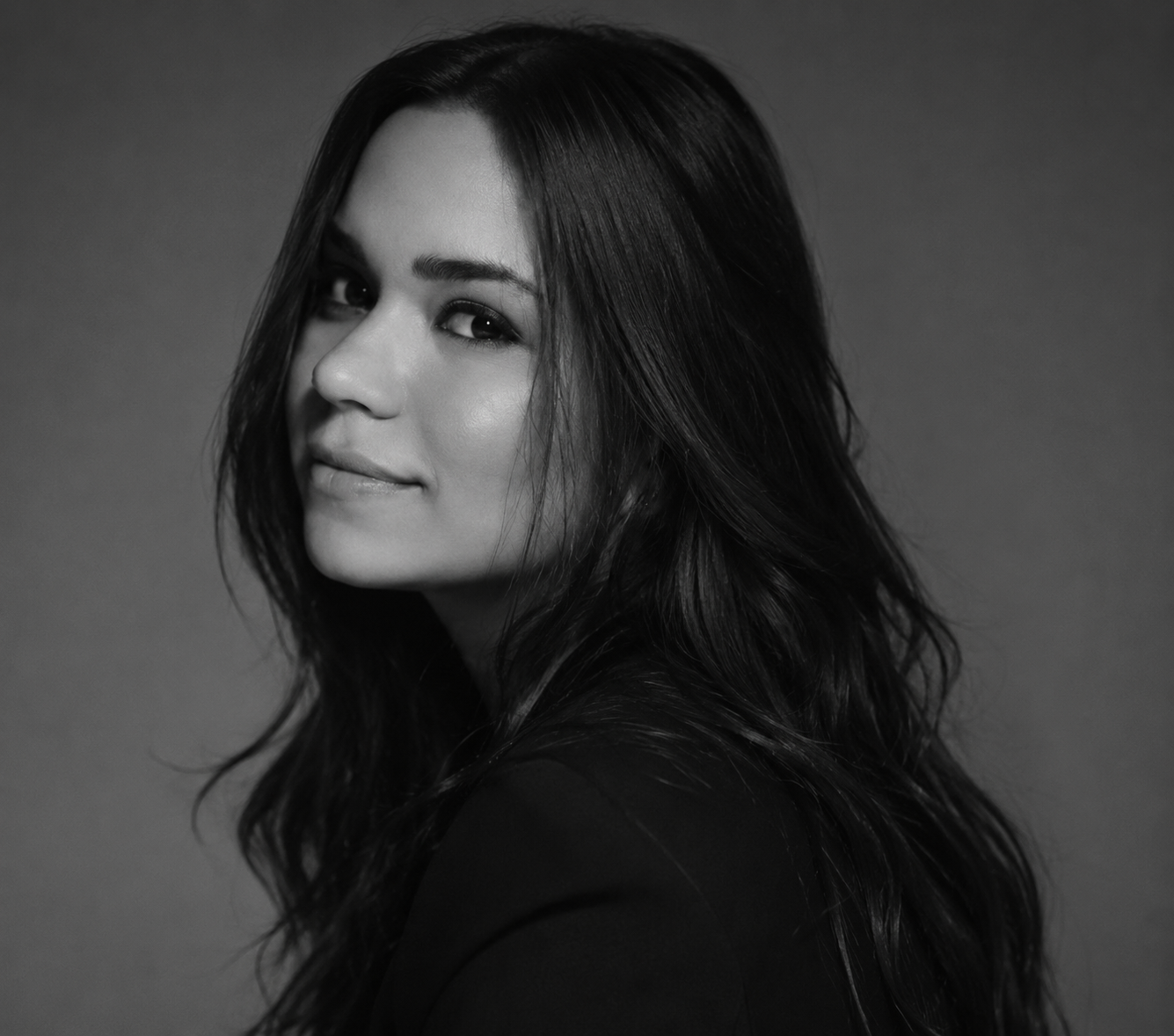
Building Modet, Caro spent years researching how some of the world's largest fashion organizations approach sourcing, procurement, inventory management, and production planning. Through that work, she became increasingly interested in a challenge that extends far beyond fashion: coordination.
"The biggest opportunity is not necessarily creating more," she says. "It's coordinating more effectively."
Historically, scale required coordinating increasingly complex operations. As organizations grew, so did the number of suppliers, shipments, decisions, and stakeholders involved.
Artificial intelligence is beginning to change that equation.
One example is Wilson, an AI employee developed by Cartage that coordinates freight operations for manufacturers and distributors. Wilson communicates with carriers, manages exceptions, coordinates shipments, and executes workflows that historically required entire teams. Today, Wilson coordinates over 90% of shipments without human intervention.
For Caro, examples like these point to a broader shift.
"For most of modern business history, organizational capability was determined by access to operational infrastructure," she says. "The companies that could coordinate the most complexity held the advantage. Today, those capabilities are becoming far more accessible."
Fashion brands have historically faced a difficult tradeoff. Growth required capital, and much of that capital was absorbed by operational complexity. More orders meant larger inventory commitments, additional production coordination, increased logistics requirements, customer support, and the teams required to manage them.
As a result, many brands discovered that demand generation was not the primary constraint. Operations were.

"The most interesting thing about AI is the ability to build a global business without inheriting all of the traditional costs of becoming one," Caro says.
Companies like Cartage have the potential to change those economics. By reducing the amount of organizational infrastructure required to support growth, businesses can deploy capital toward inventory, product development, and expansion rather than operational overhead.
The result is not simply lower costs. It’s greater leverage.
The internet democratized distribution. Platforms like Shopify, Instagram, and TikTok made it possible for a designer in Kyiv to reach customers around the world.
Yet, building an audience did not solve the operational challenges that came afterward.
For decades, many of the capabilities that separated large organizations from smaller competitors required millions of dollars and years to build.
Today, they can be acquired in months.
The next decade may be defined not by a new wave of ideas, but by a new wave of infrastructure. For Caro, the real promise of artificial intelligence is not that it changes what people are capable of building. It is that it changes what becomes possible for them to scale.